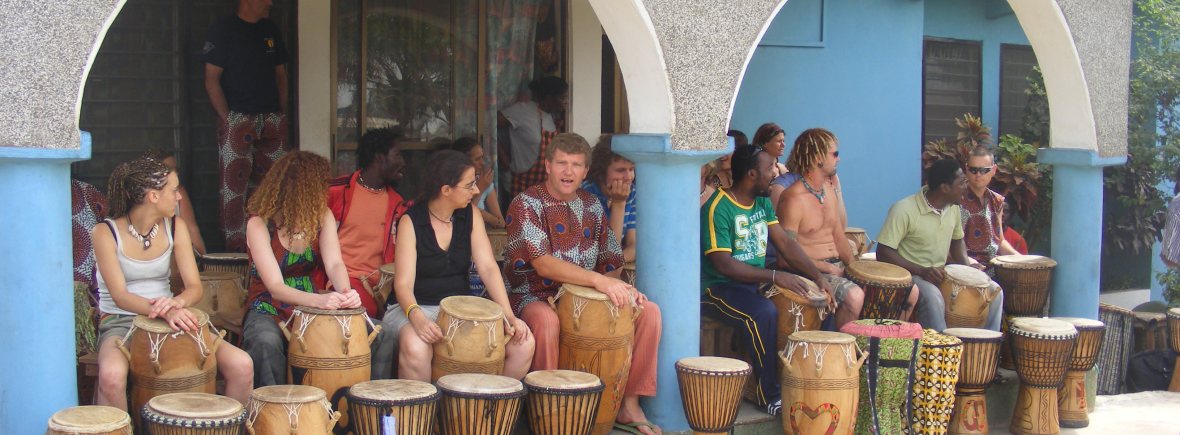
Mention hand drumming, and most people will think of African rhythms, or perhaps the belly-dance rhythms of the Middle East.
These culturally specific rhythms that have been used for millennia to mark special events of cultural significance. the passing of seasons, a birth. a death, a good harvest or to keep alive significant traditions and memories, or just for celebration.
It is important that these rhythms be learned and reproduced accurately, to acknowledge and maintain their cultural significance. Even so. a simple Internet search for a given rhythm will often turn up many similar, but not identical examples.
At Sustaining Rhythms we recognize and acknowledge the cultural significance of these rhythms, and while we may teach and perform simple African cultural rhythms, we do so to build a foundation for further learning.
Learning set rhythms, particularly those with cultural significance, can put the inexperienced student into a stress inducing “student crisis mode”, where the need to “get it right” can create stress, and the potential shame of “playing it wrong” can give rise to anxieties.
For this reason, we avoid cultural rhythms in our health and wellness programs, but incorporate them into some of our schools programs, where the focus is on learning foundational rhythms, that may be choreographed for performance.
Not everyone wants to be a Djembefola, and we defer to much more experienced Cultural Drummers for those who do.
Contact us to inquire about booking an Introductory African Drumming Circle for your group, or organisation.
 Sustaining Rhythms Music Circles